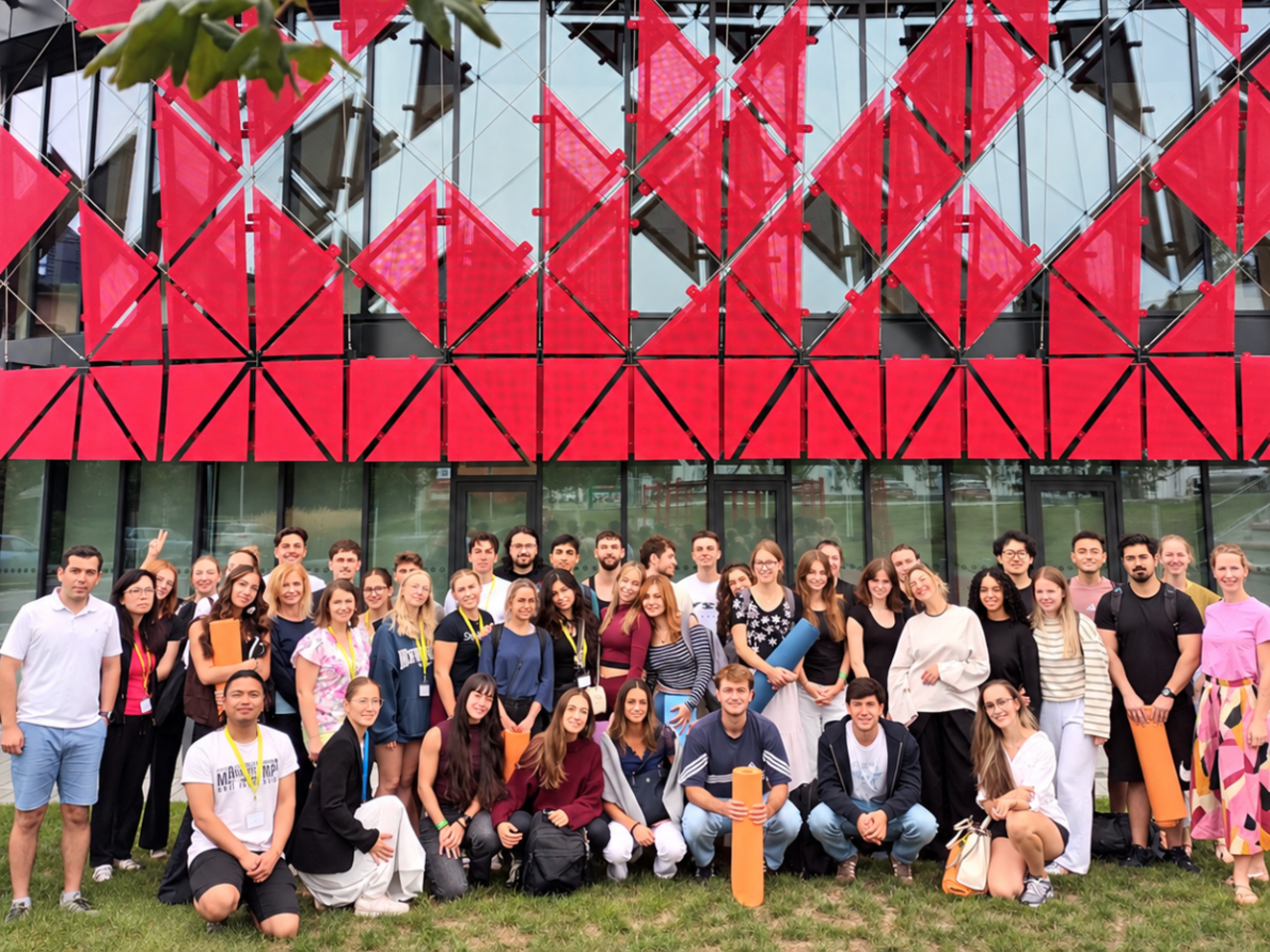
Artificial intelligence, clinical cases, hands-on workshops and different perspectives on rehabilitation from across Europe. From 7 to 11 September, the seventh Czech School of Physiotherapy and Occupation Therapy brought 39 students and six lecturers from partner European universities to the Faculty of Health Sciences at Palacký University Olomouc. Throughout the intensive week, the students shared a common task: to connect newly acquired knowledge with the care of a specific patient.
Participants in the seventh edition came from ten international universities: Medical University – Sofia, Universidad Francisco de Vitoria in Madrid, PXL University of Applied Sciences and Arts in Hasselt, Belgium, Satakunta University of Applied Sciences in Pori, Finland, University of Prešov, Catholic University in Ružomberok, Józef Piłsudski University of Physical Education in Warsaw, Opole University of Technology, University of Iceland and Agricultural University of Iceland.
This year's programme began even before the participants arrived in Olomouc. During the introductory online session, Mgr. Martin Dvořáček from the Department of Physiotherapy at the Faculty of Physical Culture, Palacký University Olomouc, presented the possibilities of using artificial intelligence in physiotherapy. Using a model patient, he demonstrated how to work with an AI assistant, gradually providing it with information ranging from the patient's medical history to the design and interpretation of examinations and therapy, as well as specific rehabilitation parameters. Throughout the demonstration, he critically evaluated the AI assistant's responses from a professional perspective.
The use of AI technologies subsequently became a recurring theme throughout the programme, and students also worked with them when addressing their clinical cases.
“We wanted the students to do more than simply attend a series of lectures and workshops. Working in international multidisciplinary teams, they therefore dealt with specific clinical cases and continuously applied their newly acquired knowledge in practice. AI was part of this process, but the key aspect was critically assessing the information obtained and deciding what was truly relevant for the individual patient,” said Mgr. Petra Gaul Aláčová, Ph.D., from the Department of Clinical Rehabilitation at the Faculty of Health Sciences, Palacký University Olomouc, and the school's main organiser.
A Week of Professional Workshops and Clinical Case Work
After arriving in Olomouc, the students worked in international teams on clinical cases involving patients with different diagnoses, social roles and life circumstances. They gradually developed their cases throughout the week, applying knowledge gained from the individual parts of the programme to patient assessment and proposed therapeutic approaches.
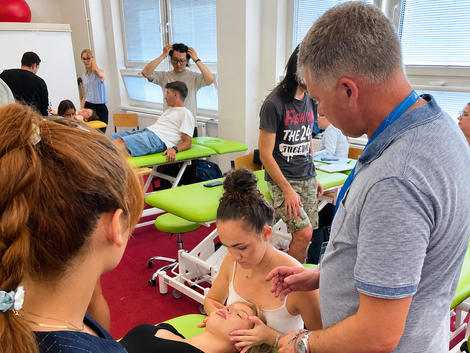
The professional sessions covered topics including kinaesthetics, functional testing in neurology, nutrition for older adults in rehabilitation, patient communication, orofacial rehabilitation and mindfulness. Students continuously applied knowledge from the individual workshops to their clinical cases and incorporated it into the care of a specific patient. They then presented the results of their work during the final presentations.
“Students from different countries and with different experiences come together around a single clinical case. They have to discuss their ideas, explain their clinical reasoning and work together to find an appropriate approach. This exchange of perspectives is one of the greatest benefits of the entire school,” added Petra Gaul Aláčová.
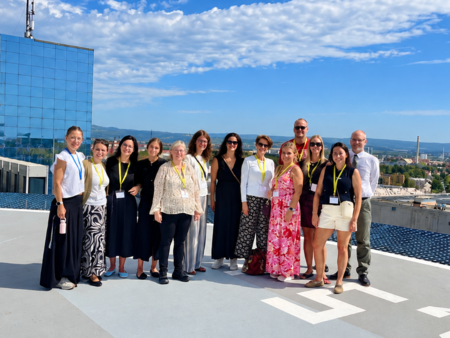
The programme also gave students an opportunity to experience rehabilitation care beyond the university classrooms. An excursion to Sanatoria Klimkovice introduced participants to a comprehensive rehabilitation care setting. In cooperation with University Hospital Olomouc, the school also organised a visit for international lecturers focusing on the hospital's pneumatic tube system, intensive care and heliport. This provided an opportunity to discuss and compare experiences from their home countries with Czech professionals.
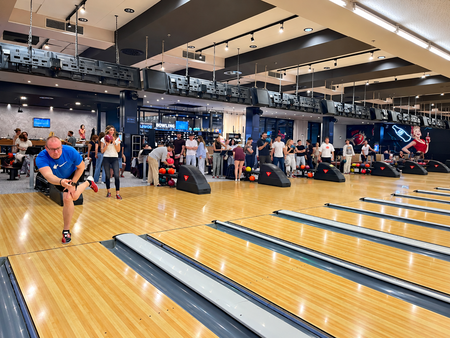
The intensive professional programme was complemented by a guided tour of Olomouc and the traditional bowling tournament, providing students and lecturers with opportunities for informal networking.
The Czech School of Physiotherapy and Occupation Therapy was held at the Faculty of Health Sciences at Palacký University Olomouc for the seventh time. The Erasmus+ Blended Intensive Programme combines professional education with international cooperation and gives students the opportunity to explore how the same patient's needs can be approached from the perspectives of different professions and in different European countries. This year's programme also raised an important and highly relevant question: how can artificial intelligence be meaningfully integrated into clinical decision-making while keeping the person standing in front of us at the centre of care?
